Low Carbon & Renewables Integration
Heat pump, PV, and low-carbon services integration for net-zero building strategies.
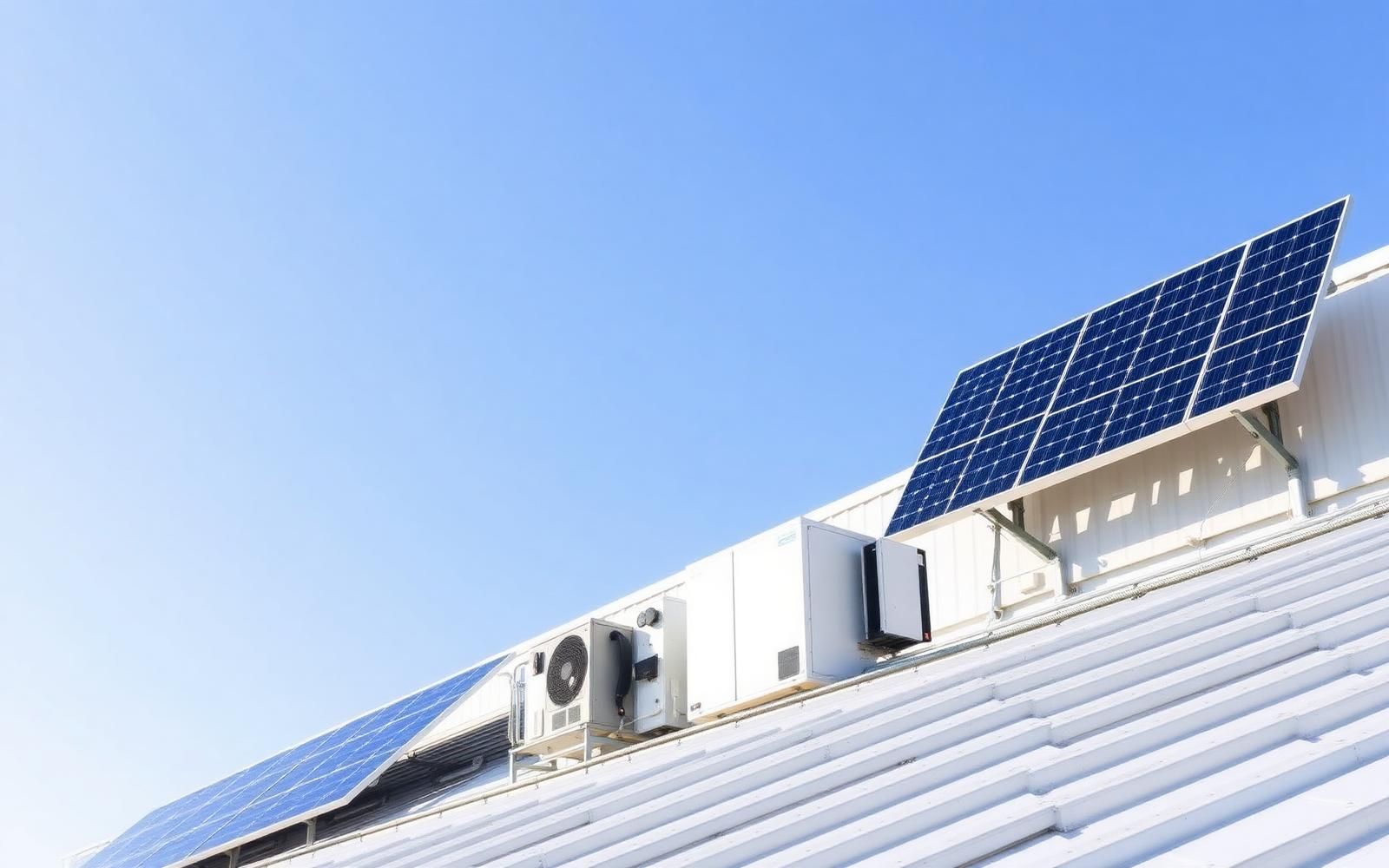
What it is
Feasibility, design and integration of low-carbon technologies — air- and ground-source heat pumps, PV, heat networks, and battery storage — into new-build and existing commercial buildings.
Who needs it
Landlords decarbonising existing stock, developers targeting net-zero commitments, and clients responding to investor or occupier ESG requirements.
When it's required
During design of new schemes and at plant replacement or refurbishment cycles in existing buildings.
What we provide
- [01]Low-carbon feasibility studies
- [02]Heat pump sizing and integration design
- [03]PV feasibility and specification
- [04]Heat network connections and district energy studies
- [05]Net-zero pathway modelling for portfolios
Related services
How this compares
Side-by-side breakdowns of the standards and routes most often confused with this service.
Retrofit vs Rebuild
Retrofit is usually faster, cheaper and lower in embodied carbon; rebuild only wins where the existing fabric or floorplate cannot economically reach the target rating or the required rent.
Heat pump vs Gas boiler
Replacing gas heating with a heat pump almost always improves a commercial EPC rating, but only pays back where the fabric and emitter temperatures suit low-flow-temperature heating.
Common questions
[01]What is a low-carbon feasibility study?+
A structured technical and commercial appraisal of low-carbon options — typically heat pumps, PV, heat networks and storage — for a specific building or portfolio, with capital cost, carbon savings and payback modelling.
[02]What are the proposed 2027 and 2030 MEES thresholds?+
Government policy has signalled a tightening of the non-domestic minimum standard towards EPC C by 2027 and EPC B by 2030, subject to confirmation. Prudent asset owners are planning capital works now against those dates, because the works required to move a mid-band building to B are frequently fabric and plant replacements that only make sense at lease or refurbishment events.
Begin a project enquiry.
Same team on services design and compliance modelling. UK-wide, from London and York.